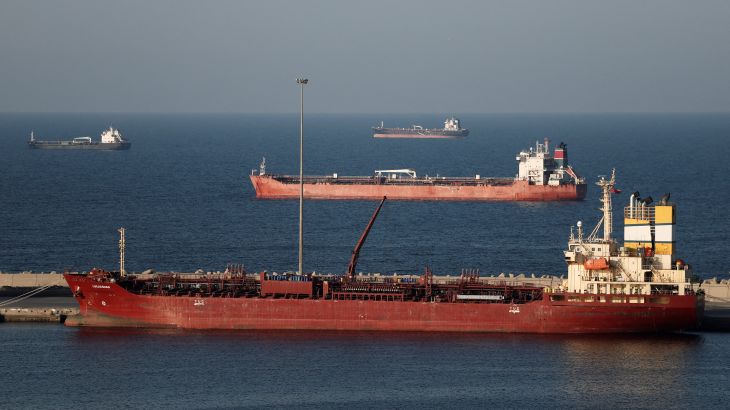
Oil and oil-based products, of all asset classes, is no stranger to market volatility. Yet the effective closure of the Strait of Hormuz following US-Israeli strikes on Iran has dealt an unprecedented blow to global energy supplies of a magnitude unseen in history. While headlines remain dominated by fluctuations in the Brent and West Texas Intermediate (WTI) benchmark prices, viscous reverberations have spread to virtually every corner of the energy market.
Crude Markets
The Strait of Hormuz serves as the chokepoint connecting the Arabian Sea to the coasts of major oil & gas producing countries including the UAE, Saudi Arabia, Kuwait, Iraq, and Qatar – which together make up nearly a quarter of global production. Its closure represents the severance of the largest exit point for barrels from these nations, trapping tankers inside the Persian Gulf, unable to make deliveries to their intended destinations. While paths of diversion westwards towards the Red Sea do exist, their capacities fall well short of filling the 20 mmbbl/d hole left by the Strait of Hormuz – the Saudi East-West pipeline towards Yanbu export terminals has a nameplate liquids capacity of 7 mmbbl/d, of which 5 mmbbl/d is allocated towards exports.
It should come as no surprise, then, that crude prices have surged across all benchmarks. So far in March, Brent has climbed 40%, WTI 42%, and Murban 46% – a stark change from the relatively depressed levels of 2025. Yet even this rise may not fully capture the severity of the supply disruption at hand. Consider that the outbreak of the Russian-Ukrainian war in 2022 sent WTI prices as high as $123/bbl and anchored it consistently above $100/bbl, but the underlying supply disruption was 1. quantitively smaller in scale and 2. brought on through disincentivizing buyers via sanctions rather than a true physical cutoff from markets. While it is difficult to place an exact number of Russian barrels that were removed from market as a result of Western sanctions, primarily due to the mechanism of marketing through shadow vessels and other black-market sales, an approximation can be extrapolated based on the pre-war export figure of 4.3 mmbbl/d. Accounting for sustained purchases by predominantly Indian and Chinese customers, it is clear that the true magnitude of disrupted oil in the Russian crisis is dwarfed by the 15 mmbbl/d of crude disconnected by the ongoing one, and that the former was manifested more evidently in the form of a pricing discount for Urals against Brent / WTI than real barrels taken off market. Current WTI prices are hovering near $94/bbl after more than two weeks of the Iranian war, a marked drop-off from levels seen four years ago.
The dominant theme behind the imbalance in market pricing reactions is the geopolitical expectation of a short war and, in turn, short disruption. While this notion has naturally become more diluted as the conflict stretched on, it continues to materialize in extreme backwardation curves for crude prices. Indeed, skepticism regarding the persistence of geopolitical premiums have become more pronounced in recent years not just in commodities trading, but also in upstream production. So far, major American producers have largely turned a blind eye to the pricing upshot by holding output steady, reflecting a broader pattern of capital discipline adopted in place of aggressive growth-chasing over the last decade. It is hard to envision any significant changes to drilling programs unless there is concrete evidence that elevated prices can be sustained – a thesis overwhelmingly rejected by the market for the time being. For Middle Eastern upstream producers, the key decision does not pertain on whether to increase production, rather to cut production – and in truth it is not so much a decision, but more so the only option. With no egress capability through the Strait and floating storage units at the brim, there is little choice but to slash crude volumes for which there is no room. The UAE and Kuwait have cut production by over 0.5 mmbbl/d each, Saudi Arabia by over 2 mmbbl/d, and Iraq by nearly 3 mmbbl/d. A technical point to be considered regarding production cuts is the potential productivity degradation imparted by shutting in producing wells. Typically, shut-ins lead to skin buildup and pressure equilibration, resulting in lower hydrocarbon yields and higher water cuts when the well is eventually returned to service.
The vast majority of Middle Eastern oil exiting the Strait of Hormuz is destined for Asian countries, thus it is Asian customers finding themselves staring down the gravest threats of supply shortages. However, they cannot be grouped into a uniform entity when considering the impacts of the current energy crisis due to substantial differences in supply base and consumption patterns. For example, China is the largest crude importer in the world and sources around half its imports from the Middle East, yet it does not face an imminent crisis thanks to a massive buildup of strategic reserves – enough to cover three months of imports – and a shift away from transportation fossil fuel consumption in recent years. Similarly, Japan and South Korea possess even greater emergency reserves, allowing them to offset over a half-years’ worth of imports despite relying on Middle Eastern oil for 95% and 70% of their respective imports. On the opposite side of the spectrum, Pakistan – whose import composition is 80% Middle Eastern – finds itself in remarkably bad shape with only two weeks of domestic stockpiles, forcing Prime Minister Shehbaz Sharif to implement austerity measures that included school closures and forgone salaries for government workers.
Perhaps the most fundamental change between the present crisis and its 20th-century counterparts is the United States’ newfound role not only of net oil exporter, but as the single largest oil exporter in the world. While elevated oil prices introduce the threat of fuel inflation for American consumers, the extra dollars spent now flows more to domestic companies as opposed to OPEC superpowers. The 1973 Yom Kippur War embargo and the 1979 Iranian Revolution both sent the US into recession as it suffered from tumultuous oil price climbs with little flexibility in domestic substitution, but the possibility of a similar outcome in today’s post-shale revolution world order can be considered near zero. Should oil prices remain heightened for an extended period (which the market considers improbable), little risk looms for domestic consumption else increased fuel costs, which will be at least partially offset, if not fully counterbalanced, on a macroeconomic scale as upstream corporations reap benefits from higher netbacks. It is true that a prolonged Iranian war carries inflated fuel costs that act as a regressive tax on consumers, but it simultaneously offers greater margins, sends strong capital investment signals, and promotes employment in one of the nation’s largest industries. Therefore, panicked shouts for recessionary stagflation in light of the current oil economy are immensely misdirected – it is a far stronger likelihood that American real GDP derives a net positive impact from sustained elevation in oil prices.
Refined & Gas Markets
If crude prices have reacted somewhat tepidly since the onset of the war, the refined products market has shown more adrenaline. March gains to-date stand at 50% for European fuel oils, 51% for Asian diesel, 102% for European jet fuel, and 118% for Asian jet fuel. Middle Eastern crude grades tend to yield more middle distillates than its lighter WTI cousin, hence the strain is more apparent in the gasoil, diesel, and jet fuel markets than in lighter products such as gasoline. This has created an opportunity for refiners to capitalize on wider spreads despite rising crude feedstock costs, with refining margins doubling on the month in both Asia and Europe – provided that they can source enough crude to refine. Unsurprisingly, regional plants are having trouble locating the input to exploit these lucrative margins. A multitude have cut run rates while the largest Saudi refinery, Ras Tanura, was temporarily shut down after being struck by Iranian drones. China, the largest regional refiner, have suspended exports of products with the aim of prioritizing domestic demands.
Analysis of crude prices leads to impacts on refined markets, and analysis on refined products leads further down the value chain into additional secondary industries. The surge in jet fuel and diesel prices in particular is already reflecting in the costs of airliners and shippers. Some airliners-such as lAG and Air France – have active hedging programs against their fuel costs that provides a degree of protection against volatility, though a prolonged period of high prices will stretch it thin. Others – Like American Airlines and United Airlines – have no hedging at all, exposing them to the full force of the crisis and leaving little alternative but to pass costs onto consumers via fare hikes or suffer drops in profitability. It should be noted that not all existing hedges are proving adequate: some airliners choose to enter futures contracts pegged to crude oil prices as opposed to regional jet fuel benchmarks, mainly for liquidity purposes. It is obvious that this strategy has largely failed to insulate contract-bearers in the current situation given the disproportionate price movements in jet fuel against crude. Similarly, logistics companies across the world face varying degrees of exposure to fuel costs. The reach of swings in refined prices can extend further into industries such as farming and mining – for example, Australia sees most of its diesel consumed by mining operations and have begun allowing dirtier fuels as well as releasing reserves to tame the supply squeeze.
While crude oil and refined price swings have manifested differently across regional hubs, the natural gas market best exhibits the geographical dependence of energy market shocks. European and Asian natural gas benchmarks have surged 59% and 75% respectively since the onset of the Iranian war, yet their US counterpart has risen a mere 7% over the same time frame. The most prominent reason for the muted move in the American benchmark is the simple lack of additional egress capacity: US LNG export terminals are effectively at full capacity and largely tied to long-term contracts, leaving little space for new spot orders from would-be Asian customers. This creates a notable geographical mismatch, particularly after QatarEnergy LNG – the single largest LNG supplier responsible for 20% of global flows – halted operations after Iranian drone attacks. By contrast against crude oil, for which production is diversified across the various Persian Gulf nations, LNG production is heavily concentrated in Qatar, making the shutdown far more consequential. For all the market supply-and-demand mechanisms at play, there is no way to bypass the physical engineering limitations hindering the alleviation of unfulfilled Asian demand with excess American supply – though some buyers have deployed a makeshift alternative by diverting tankers destined for Europe into Asia, with multiple ships changing course en route since the beginning of the war.
What’s Next?
It is the pivot from recounting to forecasting the state of the Iranian war-induced energy crisis that this discussion becomes less economic and more political. Coming from a non-finance educational background, I am even less a political scientist than economist. However, there are several clear factors driving the US-Israeli course of action upon which it is possible to approximate likely outcomes.
Firstly, the US does not need to be overly concerned with the economic impact of the war, or at least to the extent of their Asian or European counterparts. As previously discussed, it is largely insulated from the potential fallout stemming from high oil prices, with its position as the largest net oil exporter limiting its risk to a purely inflationary one rather than a recessionary stagflation as seen in the oil crises of the 1970s. Although President Donald Trump has made lowering inflation – and in fact gasoline prices specifically – a cornerstone of his agenda, this target may be superseded by a chase of landmark foreign policy achievements in his final presidential term, and there are few marks deemed more historic for American interests than the prospect of ending a regime with nuclear ambitions that has long harboured animosity towards the West. Moreover, Iran finds itself in its weakest state since Ali Khamenei’s ascent to power with its economy crippled, proxy militias decimated, and citizens rioting. It is difficult to imagine President Trump and his military generals relinquishing an opportunity of this nature and settling for anything less than regime change – even if it comes at the cost of inflationary risks. It should be taken as a probability, not a possibility, that the US seeks to take the war to completion (potentially by means of deploying ground forces) and fully topple the Iranian Revolutionary Guard, as opposed to withdrawing from the campaign prematurely. Another key influencing variable is the continuing reaction of Gulf nations as their economic lifelines remain choked off and cities pelleted by Iranian projectiles. The uptick in bilateral investments between the US and Middle Eastern nations since President Trump’s inauguration magnifies the pressure that these countries could potentially exert towards ending the conflict and subsequently restoring their revenue streams. Despite this, borrowing from precedents in President Trump’s “America-first” playbook suggests foreign pressure will likely be limited in effect, and may yet make the case for a more aggressive campaign in search of accelerated regime change – possibly featuring a ground invasion – rather than a diplomatic off-ramp.
Considering solely the number of barrels removed from market and benchmarking against prior supply shocks, then the market’s current response to the Strait of Hormuz’s closure is far too complacent, even in light of IEA pledges to release reserves – which may take months to truly reach market due to infrastructure constraints. But the geopolitical uncertainty over the timeline of the war justifies what would otherwise be outrageously low pricing for the most severe oil disruption in history. There also exists the possibility that resumption of traffic through the Strait can occur without total decimation of the Iranian regime, but with sufficient weakening of its military capability to target commercial vessels via projectiles and mines, potentially enabling a gradual easing of supply on a highly variable basis contingent on shippers’ risk appetites.
Last May, I wrote an analysis concluding that crude oil faced imminent oversupply and that prices would likely remain depressed for some time. This fundamental supply-side theory, in my view, has not changed for the long run. Dramatic as the present supply interruption may be, it is geopolitical in nature and should not alter underlying energy production and demand dynamics. While any attempts at forecasting short-term prices is futile given its lockstep correlation with political headlines rather than market economics, the long-run future for the crude oil market ultimately remains one of supply outpacing demand growth, in which WTI pricing below $70/bbl should be considered the norm. The ongoing war is but a halt in the energy market’s sure steps towards this future, but it is important to recognize that no matter how prolonged this halt may be by wartime standards, the steps will ultimately pick back up.


Leave a comment